Self-care, Thinking and Being

Combating Semantic Satiation: Staying Alert in an Oversaturated World

We have all sorts of therapized buzz words flying around us, both online and in the real world. Self-care. Boundaries. Self-regulation. Little t trauma, big T trauma. Emotional intelligence. Authenticity. Stressors. Stress management. These, and more, have become shapeless and foggy, the way words turn if you repeat them over and over again.

The old adage of Spoon. We all did this as kids. We said the word “spoon” over and over until it no longer felt like a word. This effect is known as semantic satiation. This happens when the brain’s pathways for a specific word become fatigued and it can no longer keep up with comprehension of the word.

Repetition is important for learning, but with that, we need the coupling of timing. Imagine you are lifting weights. If you try to pump up weights quickly, with no breaks in between reps, your arms will be burning much sooner than you want them to. The same goes for integrating concepts around self-improvement.

But wait a second, Anna. I didn’t ask for semantic satiation with stuff like “self-care” and “stress management”. It just happens. I’m online, I’m scrolling, I’m talking with other people who are in therapy. It’s a cultural issue. And you know what? You are absolutely correct.

So, how do we combat this and take back the meaning of important concepts like self-care and self-compassion?

1.Research the origins of the word

      So let’s keep working with the concept/ word of “self-care”. Brief research on the word shows that it actually originated in the 1500s. It was used mainly in medical contexts to describe how patients could self-improve symptoms. It really took off in the 1950s when doctors were looking for ways to help the elderly and chronically mentally ill increase their independence… think building schedules for eating, bathing, and sleeping. Then, demanding professions such as nursing and social work took the concept to describe what they needed to do to prevent burn-out… leave work at work, meditation, protecting lunch breaks, etc.

      2. Write about what the word means to you

        Do you remember when you first heard the term self-care? Which settings have you heard it in the most? Who have been the people who have been prescribing it the most to you? How specific can you get with your definition while still encompassing all it needs to encompass?

        3. Explore how it can be applied to your life

          What is YOUR ideal version of self-care? Is it setting up basic routines for daily life, or is it hammering out your long-term career goals? How can we blend “fun” self-care with “necessity” self-care? What’s getting in the way for you for making self-care actionable? What blocks to self-care are happening on an individual, community, and societal level? What is one small way you can practice self-care this week?

          In an oversaturated world, we are to be vigilant with our critical thinking. Notice when a word or concept feels vague, especially when you know how to use that word/ concept in a normal sentence. Take the time to understand it, roll it over in your hands, and feel how applicable it is for you. Don’t forget to do some self-care this weekend.

          Kreitz, Mary. “A History of Self-Care.” Child and Adolescent Behavioral Health, 8 Apr. 2024, http://www.childandadolescent.org/a-history-of-self-care.

          “Self-Care, N. Meanings, Etymology and More | Oxford English Dictionary.” Oxford English Dictionary, 2025, http://www.oed.com/dictionary/self-care_n.


          Uncategorized

          I’ve never been to therapy, what should I expect?

          Whenever someone who has never been to therapy walks through my door, I always congratulate them on taking the first hard step inside. Therapy can seem very intimidating when you’re not sure what to expect… what the therapist will say, how deep things will get, how it will feel talking about personal difficulties, etc.

          1. Expect your therapist to ask about both about difficulties and highlights of your life
            • A good therapist won’t just focus on the bad or hard stuff. Your therapist should also ask about your interests, your social life, goals you’ve already met, and the better parts of your personality.
          2. Expect some unexpected emotions
            • Sometimes, people will experience some sudden tearfulness when talking about their difficulties. Other times, they are surprisingly casual when sharing a traumatic experience. You don’t have to do anything with these reactions just yet, just simply notice what is happening emotionally for you in the moment.
          3. Expect your therapist to talk about the therapeutic relationship itself
            • A lot (and I mean a lot) of therapy is learning to recognize your patterns of behavior, stuff that has become so habitual that it just becomes a massive blind spot. One of the ways therapists get clients to recognize their behavior is reflecting on the therapeutic relationship. Think “I notice you use humor to deflect whenever I ask a challenging question” or “I notice you get irritated with me whenever I point out your tardiness to session” etc. Be ready to talk about whatever is happening in the moment
          4. Expect things to get a little bit worse before they get better
            • I always give the analogy of resetting a broken bone. The resetting causes temporary enormous pain that can be as bad or worse than the actual break, but it’s for a good cause. Therapy can be much the same… you might feel a little worse off when working through difficult topics or emotions. Don’t worry, this won’t last forever, and it’s for a good cause.

          There are as many ways to practice therapy as their are clients, but these are some consistent traits you will find across therapy experiences. Therapy should always pull you towards growth and healing, and you should feel like you have a trusting relationship with your therapist. Take the plunge into therapy, even if you are scared. It’s for a good cause.

          Self-care

          What do “boundaries” even mean?

          Let’s talk about boundaries, because therapists love to talk about boundaries.

          A boundary is a stopping point or a limit. That’s it, that’s all a boundary really is. But here’s the thing… when you put up a fence between you and your neighbor, that’s it. That’s the limit, it’s tangible and you both see it every day.

          Emotional and mental boundaries are much more challenging to hold compared to your neighbor’s fence. What makes boundaries so hard?

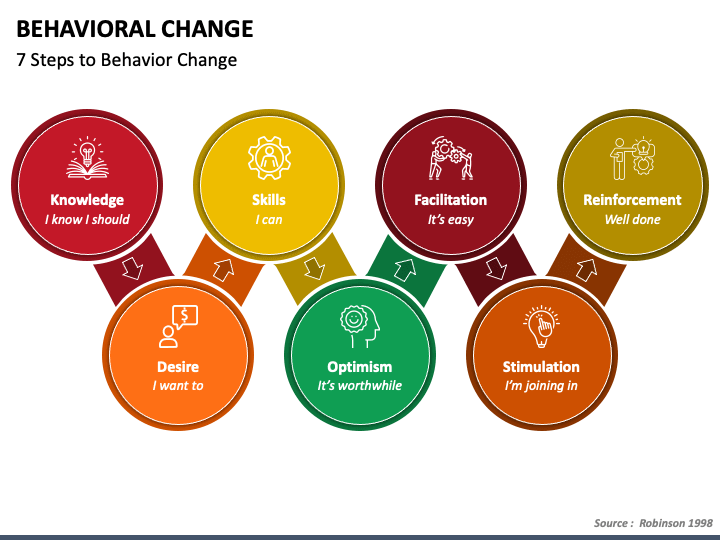
          Because we are trying to enact behavioral change. Each time we set a boundary, we are 1) changing how we react to the situation, and 2) trying to encourage the other party to change how they act. This is why emotional and mental boundaries are not one and done. They need to be set over and over again, because behaviors do not change overnight.

          But how can I survive with setting a boundary with my mom 20,000 times over the 7 days between Christmas and New Years? The answer, while cheeky, has been proven to help people through all sorts of chronic or lasting personal problems.

          Self-care.

          Go set that boundary, then take a breath. Tell yourself you did a good job, even if it didn’t go exactly as you had planned. You’re still learning, you know. Take a walk, play some Nintendo, read your favorite novel, have a gossip session with your friend or sister. Then go back to setting the boundary as needed, and then swing back to self-care. Think of it as a see-saw. Each end is attached the other… you can’t have boundary setting without also having self-care.

          Uncategorized

          What is the most effective form of therapy?

          Excellent question! And one that is actually pretty easy to answer. Most people are familiar with the third wave of therapeutic modalities… cognitive behavioral, dialectical behavioral, and acceptance with commitment (CBT, DBT, and ACT, respectively). These three are evidence-based and can be very structured modalities. But there’s a whole plethora of modalities… psychodynamic, somatic, solution-focused, Gestalt, and Adlerian, to name a few.

          Fun fact! Did you know that DBT was developed by Dr. Marsha Linehan, who herself had borderline personality disorder?

          Dr. Marsha Linehan

          So, which modality is best? Actually, the answer is none of them. It turns out, one modality is not better than the other. The number one predictive factor for therapeutic growth and change is this… it’s the relationship. If you feel like you get along well with your therapist, you trust them and you feel like you can share anything, then there’s a pretty good chance you will have a good outcome with therapy.

          A relational therapist is not rigid. I don’t say “CBT for everyone”, because it’s not appropriate for every client’s treatment plan. A relational therapist notices both the client’s strengths and areas of growth, which helps inform the therapist on what will be most helpful for the client.

          So don’t be fooled by “CBT is best” or “ACT is the most helpful” (even though I really do like ACT’s principles). If you build trust with your therapist, then you are well on your way to positive change.