Self-care

Coping with Winter Blues

Many people who struggle with mental illness, particularly depression, notice that they tend to feel a bit worse during the winter months. This is for several reasons, with the most well-known being the lack of sunlight during the early evening hours. Sunlight is correlated with Vitamin D, which is correlated with mood, so it stands to reason that the amount of sunlight we get correlates with mood. While the relationship between sunlight and mood is a bit more complicated that that, it is one of several reasons that winter months are challenging.

Other reasons include stressful holiday seasons, cold weather, lack of aesthetics (the stick season isn’t what’s pictured for New England tourism), and the length of our winter season.

So… how do we cope?

  1. Get a sun lamp
    • Sunlamps, while the research on their efficacy is variable, can be a great addition to your morning routine. They can be pretty cheap online, too. There is little risk to adding a sunlamp to your living room, so why not? It isn’t recommended to use them in the evening as they are a form of blue light and can disrupt circadian rhythms, aka sleep patterns.
  2. Do less
    • While my life is busy with work and parenting, I generally try to schedule less. My body clearly has a need to slow down during this season, so I try to honor this need. I’m more likely to go visit Magic Wings or go to the beach during our mild summer months. In the winter, I like to hunker down with a book or some easy crochet. Keep it low key.
  3. Keep a routine
    • With less places to go (no beach visits) and/ or crazy holiday schedules, our routines can end up in upheaval. Try to keep some semblance of rhythm, whether it’s a warm cup of coffee in the morning or reading a book before bed. Try to give yourself some touch points of consistency.
  4. Be kind to yourself
    • It is not helpful to beat yourself up for feeling a bit worse during the winter. Shame has been scientifically shown to be a terrible motivator. If you have been beating yourself up for feeling extra blegh, try not to beat yourself up for beating yourself up. Self-compassion can start right here, right now.
  5. Keep in mind this is all temporary
    • Winter doesn’t last forever. The sun will stay out past 6 and the trees will bloom again. Hang in there, the late winter months are the home stretch.

Self-care

What do “boundaries” even mean?

Let’s talk about boundaries, because therapists love to talk about boundaries.

A boundary is a stopping point or a limit. That’s it, that’s all a boundary really is. But here’s the thing… when you put up a fence between you and your neighbor, that’s it. That’s the limit, it’s tangible and you both see it every day.

Emotional and mental boundaries are much more challenging to hold compared to your neighbor’s fence. What makes boundaries so hard?

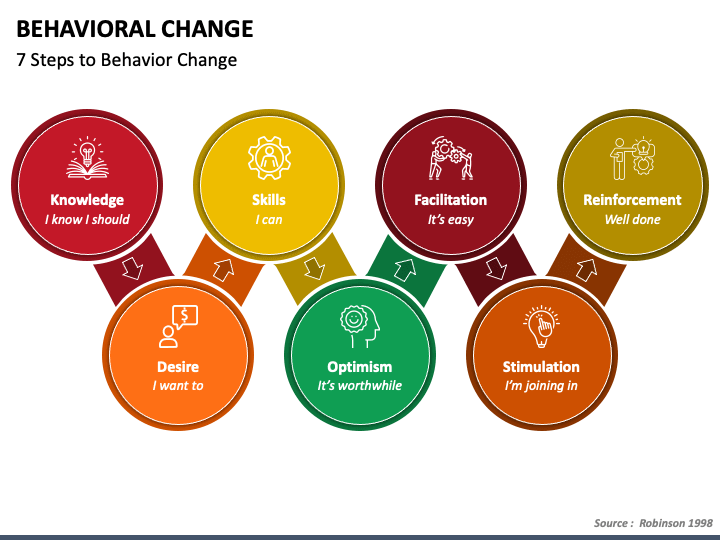
Because we are trying to enact behavioral change. Each time we set a boundary, we are 1) changing how we react to the situation, and 2) trying to encourage the other party to change how they act. This is why emotional and mental boundaries are not one and done. They need to be set over and over again, because behaviors do not change overnight.

But how can I survive with setting a boundary with my mom 20,000 times over the 7 days between Christmas and New Years? The answer, while cheeky, has been proven to help people through all sorts of chronic or lasting personal problems.

Self-care.

Go set that boundary, then take a breath. Tell yourself you did a good job, even if it didn’t go exactly as you had planned. You’re still learning, you know. Take a walk, play some Nintendo, read your favorite novel, have a gossip session with your friend or sister. Then go back to setting the boundary as needed, and then swing back to self-care. Think of it as a see-saw. Each end is attached the other… you can’t have boundary setting without also having self-care.

Uncategorized

What’s a DSM?

I think we’ve all heard of the DSM at some point in our mental health journeys. So… what is it, exactly?

The DSM, also known as the Diagnostic and Statistical Manual of Mental Disorders, is on it’s 5th variation. Each variation comes with an updated list of diagnoses and criteria for each diagnoses. Often, names of diagnoses are changed to address the colloquialism of mental health disorders (eg., Munchausen’s by Proxy was changed to Factitious Disorder Imposed on Another… doesn’t have quite the same flow, but Munchausen isn’t even a real person). Some disorders are disposed of alltogether (homosexuality was dropped as a disorder in the 3rd variation), and sometimes, the powers at be change minute language to better match the statistical outcomes of what’s been researched.

So what does the DSM do? It serves as a basis when understanding basic criteria for mental health diagnoses. The DSM does not carry the breadth of symptoms for diagnoses. For example, an inflated sense of responsibility is a significant and debilitating symptom of OCD, but you won’t find it in the DSM. It’s a nuance of the disorder that isn’t part of the minimum criteria for diagnosis of OCD.

The DSM also serves as a universal playbook for licensed clinicians to bill insurance. Chaos would ensue if we didn’t have a universal standard for diagnoses and subsequent treatment plans.

To summarize… the DSM is useful, but doesn’t cover all nuances of every disorder. It’s called a manual for a reason… an instruction manual for your favorite IKEA furniture isn’t going to tell you all the great ways you can use your new rocking chair, it’s simply going to give you the building blocks.